Board and Batten Siding for Haliburton Cottages: What Your Siding Contractor Wants You to Know
Published November 2026 | Last Updated November 2026
TL;DR: Board and batten is a look, not a material, and how long it lasts on a Haliburton cottage depends more on what's behind the boards, the clearance from snow and ground, and the material you choose than on the boards themselves. Wood needs regular refinishing, and fibre cement or metal are the options FireSmart Canada favours for lots near trees.
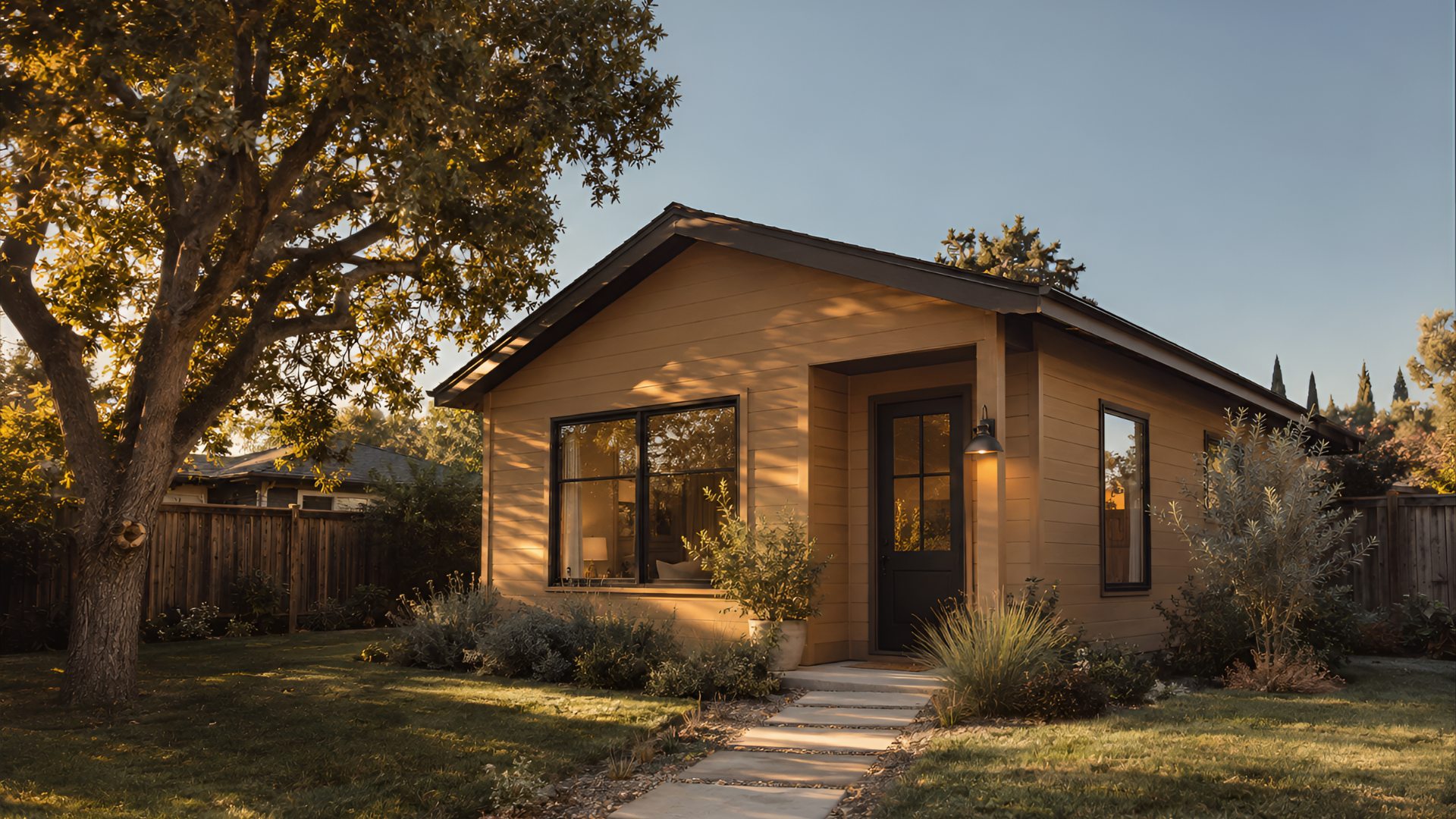
Board and batten is a vertical profile, wide boards with narrow battens covering the seams, and it can be built in wood, fibre cement, metal, or vinyl. Its lifespan on a Haliburton cottage depends on the drained gap behind the boards, the clearance from ground and snow, and the material you choose.
QUICK ANSWER
Choose the material first, then insist on a proper wall behind it. The boards are the part you see, and the strapping, flashing, and clearances are the part that decides whether the wall is sound in twenty years.
Key Takeaways
- Board and batten is a profile that can be made in wood, fibre cement, metal, or vinyl
- Vertical siding needs strapping behind it, and Ontario manufacturer guides recommend double furring so water can drain
- Manufacturer guides call for at least 8 inches between siding and the ground, and more where snow piles up
- Wood stain on siding lasts roughly 2 to 8 years depending on the surface and exposure
- FireSmart Canada lists fibre cement and metal as non-combustible, and wood and vinyl as combustible
Thinking about board and batten for your cottage? Talk to Country Contracting or call 705-457-6411.
The part of a siding job you see is the last thing we install. The part that decides how it ages is behind it.
At Country Contracting, our
siding contractor services cover vinyl, wood, aluminum, metal, and fibre cement siding. This guide explains what we want cottage owners to know about board and batten before they hire anyone.
Siding is one half of an exterior. For the other half, see our comparison of
metal roofing and asphalt shingles for Haliburton cottages.
What Is Board and Batten Siding, and Is It a Good Fit for a Cottage?
It's a vertical pattern: wide boards set side by side, with narrow battens covering the seams. It suits cottages because the vertical lines read as rustic and shed water down the wall, but only if the material and the wall behind it are right.
Board and batten is a style, not a material, so you can choose the material separately (Sherak). The siding materials we install each have trade-offs, summarized from what our own service page says and from FireSmart Canada's fire ratings.
| Material | What to know | Fire note (FireSmart Canada) |
|---|---|---|
| Wood (cedar, spruce, pine) | Natural look, needs regular staining or painting | Combustible |
| Fibre cement | Low maintenance, handles harsh winters | Non-combustible |
| Metal | Durable, fire-resistant, low maintenance | Non-combustible |
| Vinyl | Resists moisture and rot, low maintenance | Combustible, and can melt in high heat |
Ask which board-and-batten profiles each material comes in, since availability differs by product. FireSmart Canada's siding fact sheet says stucco, brick, fibre cement, and poured concrete offer superior fire resistance, and that vinyl can melt and let fire reach the wall behind (FireSmart Canada).
What Goes Behind the Boards Matters More Than the Boards
Vertical siding needs horizontal nailing support, so the wall is strapped first, creating a gap behind the boards where water drains and air moves. Ontario manufacturer guides recommend double furring for vertical siding so that water can run down behind it.
The Western Red Cedar guide says vertical siding is nailed to horizontal blocking or furring strips, and recommends a rainscreen: furring strips that hold the siding off the house wrap (Western Red Cedar guide). Maibec's installation guide says furring creates a ventilated space between the siding and the water-resistive barrier (Maibec).
For vertical siding, Goodfellow and Maibec both note that horizontal-only furring is permitted in Ontario under conditions, and recommend double furring, vertical strips first and then horizontal ones (Goodfellow). Follow the manufacturer's guide for your product and the cladding rules in Part 9 of the Ontario Building Code.
Clearances matter in snow country: Maibec's guide calls for 8 inches from the ground, 2 inches from adjacent horizontal structures, and a half-inch space above flashing, while the cedar guide suggests 6 inches from ground level. Haliburton's 1981 to 2010 normals show about 1,070 millimetres of precipitation a year (University of Toronto thesis), so plan for where snow will pile against a wall.
How Do You Care for Wood Board and Batten, and What About Fire?
Wood needs refinishing: stain typically lasts about 2 to 8 years depending on the surface and exposure, and the edges and end grain need sealing. On a lot with trees close to the cottage, ask about fibre cement or metal, which FireSmart Canada classes as non-combustible.
The USDA Forest Products Laboratory reports that semitransparent stain lasts 4 to 8 years on wood, and that two coats can last about 10 years on saw-textured wood (Wood Handbook, chapter 16). It also says edges are vulnerable to water absorption and need to be sealed.
Cedar industry guidance gives shorter lives for semi-transparent stain on cedar, about 1 to 3 years on some surfaces and 2 to 4 on textured ones (cedar finishing guide). That spread is why we'd rather give you a refinishing schedule for your exact material and exposure than a single number.
FireSmart Canada recommends at least 15 centimetres of non-combustible material between grade and combustible siding, and says to replace combustible siding with non-combustible or ignition-resistant materials where you can. It adds that local areas may have their own requirements, so treat it as guidance for a forested cottage lot, not as a Haliburton rule.
What Does Your Siding Contractor Want You to Know Before You Hire?
Six things: the material is separate from the style, the wall behind the siding decides its life, clearances matter in snow, wood needs a finish schedule, fire guidance applies to forested lots, and old siding can hide problems. Ask each contractor how they handle all six.
- The material is a separate choice. Decide on wood, fibre cement, metal, or vinyl first, then ask which board-and-batten profiles it comes in.
- The wall behind the siding decides its life. Ask how the wall will be strapped, flashed, and drained, as well as which boards you're getting.
- Clearances matter in snow. Ask what clearance from the ground and from decks and roofs the installer will leave.
- Wood needs a finish schedule. Ask what finish, how many coats, and when it will need redoing.
- Fire guidance applies to forested lots. Ask whether a non-combustible material makes sense near the trees.
- Old siding can hide problems. Ask what happens if the tear-off reveals rot or damaged sheathing.
How Do You Start a Siding Project in Haliburton?
Tell the contractor about the cottage, the surroundings, and how you use it, then ask for a written scope that names the material, the wall prep, and the finish. A written scope lets you compare contractors on the same terms.
What to do first:
- Describe the cottage. Age, current siding, and anything you've noticed, such as soft spots or peeling.
- Share the site. Trees close to the walls, snow load, and whether the cottage is used year-round.
- Ask about the wall. How it will be strapped, flashed, and drained.
- Ask about verification. WSIB clearance and a certificate of liability insurance.
- Where we are. ON-35, Minden, ON K0M 2K0, serving Minden, Dorset, Carnarvon, and Haliburton County. Call 705-457-6411 or use the contact page.
Frequently Asked Questions
Is board and batten siding a good choice for a Haliburton cottage?
It can be, if the material and the wall behind it are right. The vertical lines suit a cottage and shed water downward, but the strapping, flashing, and clearances decide how long it lasts in a snowy, forested setting.
What is the best material for board and batten on a cottage?
It depends on your priorities. Wood gives the natural look but needs refinishing, fibre cement and metal are classed non-combustible by FireSmart Canada, and vinyl is low maintenance but can melt in high heat. Ask which profiles each comes in.
How often does wood board and batten need to be restained?
Roughly every 2 to 8 years depending on the surface texture and exposure. The Forest Products Laboratory reports 4 to 8 years for semitransparent stain on wood, while cedar guides give shorter lives on some surfaces, so ask for a schedule for your material.
Does board and batten need a gap behind it?
Yes. Vertical siding is nailed to strapping that holds it off the wall, creating a drained, ventilated gap, and Ontario manufacturer guides recommend double furring. Follow your product's installation guide and Part 9 of the Building Code.
How high above the ground should siding start?
Maibec's installation guide calls for at least 8 inches from the ground, and FireSmart Canada recommends at least 15 centimetres of non-combustible material between grade and combustible siding. In snow country, plan for where snow will pile.
Do I need a permit to replace siding on a Haliburton cottage?
Minden Hills's permit list includes re-insulating walls but doesn't list re-siding. Ask your municipal building department before you start, because changing the wall assembly, such as adding insulation, can trigger a permit.
How do I start a siding project in Haliburton?
Contact Country Contracting and Construction at 705-457-6411 or through the contact page, and describe the cottage and its surroundings. Ask for a written scope that names the material, the wall prep, and the finish.
Trust & Authority
About the author: Brett Hicks is the founder of Country Contracting and Construction, a family-owned business in Minden, Ontario. The company says it has more than a decade of experience and is registered, insured, and WSIB compliant. About us.
We side cottages and homes across Minden, Dorset, Carnarvon, and Haliburton County, and the wall behind the boards is the part we'd most like you to ask about. Our office is on ON-35 in Minden, K0M 2K0.
Summary and Next Step
Board and batten is a profile you can build in several materials. Choose the material first, then ask how the wall behind it will be strapped, flashed, and cleared from snow and ground.
Ready to talk about your cottage's siding?
Contact Country Contracting and Construction, ON-35, Minden, ON K0M 2K0, or call 705-457-6411.
Brett Hicks
ON-35, Minden, ON K0M 2K0, Canada
Phone: 705-457-6411
This is educational content, not legal, engineering, or building advice. Permit requirements, zoning limits, and setbacks vary by municipality and property and can change. Confirm all requirements with your local building department before starting any project.