Spring Thaw Survival: Identifying Post-Winter Foundation & Drainage Issues

As the snow melts across Ontario in early 2026, homeowners face a silent but powerful adversary: hydrostatic pressure. While the "Spring Thaw" sounds like a gentle transition, it is actually one of the most physically demanding times of year for your home’s infrastructure. The combination of rapid snowmelt and seasonal rains saturates the soil, creating thousands of pounds of pressure against your basement walls.


At Country Contracting, we specialize in the "groundwork" that keeps homes dry. Understanding how to spot the early warning signs of foundation stress today can save you from a catastrophic basement flood—and a repair bill that could easily climb into the tens of thousands.


1. The Science of the "Freeze-Thaw" Cycle

In Ontario, our soil is frequently rich in clay, which acts like a sponge. During the winter, water in the soil freezes and expands by about 9%. This expansion pushes against your foundation—a process known as frost heaving.


When the thaw begins, that frozen "grip" on your house releases, but the newly liquid water has nowhere to go because the deeper ground is still frozen. This creates a "bathtub effect" around your foundation. The water sits and presses against your concrete walls with relentless force. If there is even a hairline fracture, this pressure will find it and force moisture into your living space.


2. Interior Warning Signs: The 5-Minute Basement Walkthrough

You don’t need to be an engineer to spot potential foundation failure. Take a walk through your basement and look for these "Red Flags":


  • Horizontal Cracks: Unlike vertical "settling" cracks, horizontal cracks are a serious warning sign that the soil outside is physically bowing your wall inward.

  • Efflorescence: Do you see a white, powdery, or chalky substance on your concrete? This is efflorescence—mineral deposits left behind as water seeps through the porous concrete and evaporates.

  • Sticking Doors and Windows: If your basement door suddenly drags or a window won't latch, it’s often because the foundation has shifted slightly due to soil saturation.

  • Musty Odours: If your basement smells "heavy" or damp, mould is likely already beginning to grow in hidden crevices or behind insulation.


3. Exterior Red Flags: The Drainage Checklist

Your home’s first line of defence isn't the concrete; it’s the grading and drainage around it. Walk the perimeter of your house and check for:


  • Negative Grading: Does the soil slope toward your house? Over the winter, soil often settles near the foundation. You need at least 6 inches of slope over the first 10 feet to effectively move water away.

  • Downspout Disconnects: Ensure your downspouts extend at least 6 to 10 feet away from the house. Water dumping directly at the base of the wall is the #1 cause of basement leaks.

  • Sinking Walkways: If your front walk or patio has tilted toward the house, it acts as a funnel, directing meltwater straight into your foundation.
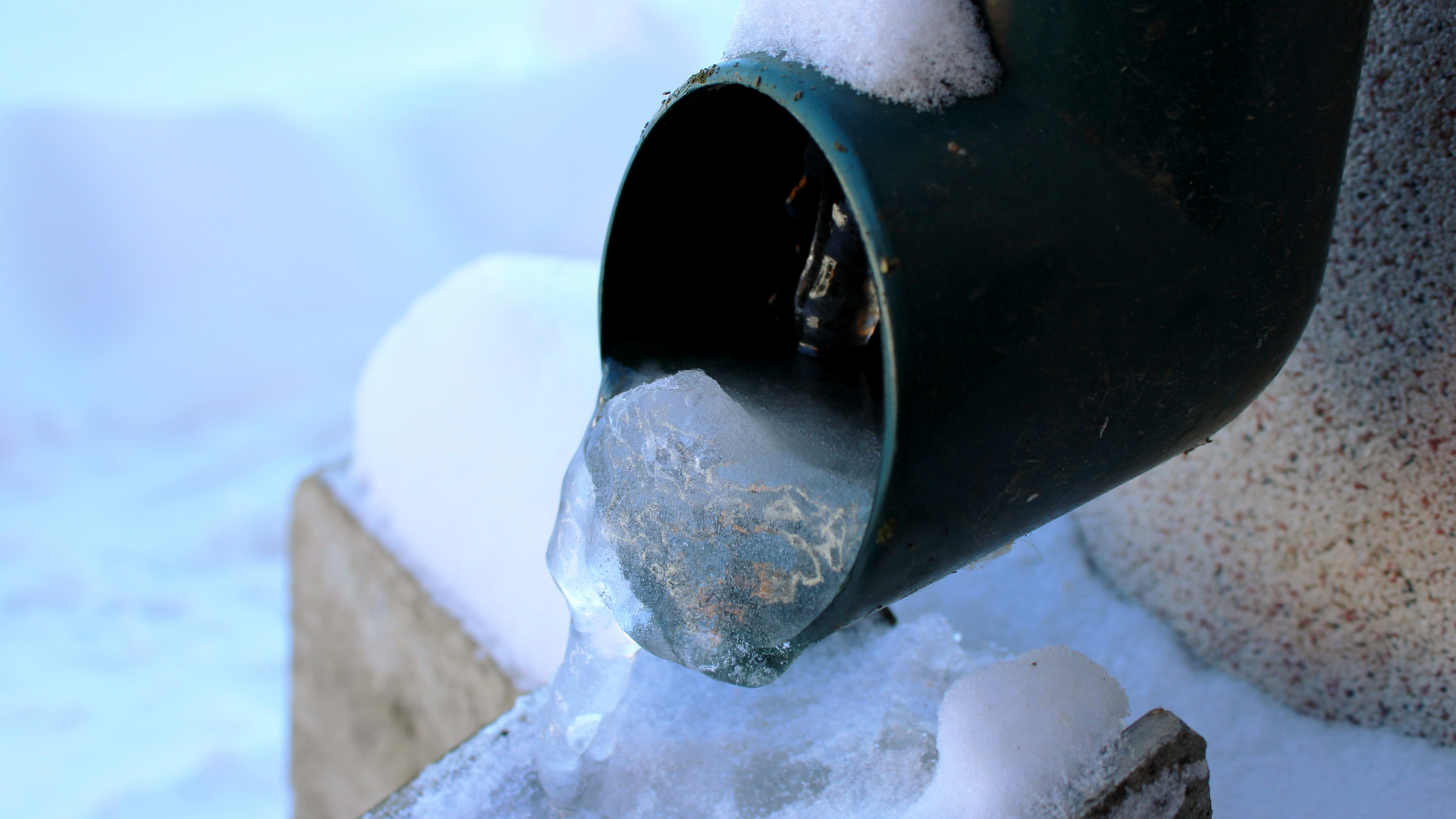
A green metal downspout dripping with icicles over a snow-covered surface in a winter setting.

4. Modern Solutions: Fixing the Root Cause

In 2026, foundation repair has moved beyond just "patching cracks." To truly protect your home, you must manage the water before it ever touches your walls.

  • Residential Excavating & Regrading: We use precision machinery to restore a positive slope to your lot. This ensures water flows to natural drainage swales rather than your basement.

  • French Drains & Trenching: For properties in low-lying areas, we install sub-surface drainage systems that intercept groundwater and redirect it safely away from the structure.

  • Professional Lot Clearing: Overgrown brush or old stumps can trap water near your home. Professional lot clearing enhances airflow and ground stability, enabling the earth to dry out more quickly.

5. The "Half-Load" Factor

Remember, Ontario municipalities typically implement Reduced Load Restrictions (also known as Half-Loads) starting around March 1st. This means heavy trucks and machinery are restricted on local roads. If you identify a drainage emergency in March, you need a contractor who has already pre-staged equipment or uses agile machinery to bypass these logistical hurdles.


Conclusion

The spring thaw doesn't have to be a season of anxiety. By identifying foundation and drainage issues early, you can implement permanent solutions that protect your home’s structural integrity and resale value. Remember: a dry basement starts with a well-managed lot.

GET A CUSTOM DECK QUOTE

FAQs: Spring Foundation & Drainage

  • Why does my basement only leak in the spring?

    This is due to "perched water tables." The surface snow melts, but the ground a few feet down remains frozen. The water becomes trapped in the top layer of soil, directly adjacent to your foundation walls, creating intense hydrostatic pressure.

  • Are vertical cracks in my basement normal?

    Many vertical cracks are "shrinkage cracks" from when the concrete was first poured. However, if they are wider than 1/8 inch or appear to leak water, they should be professionally assessed and sealed immediately.

  • How much does foundation repair cost in 2026?

    While minor crack injections may cost between $500 and $1,500, major structural stabilization or exterior waterproofing can range from $5,000 to $ 20,000 or more. Catching the issue early is the only way to stay on the lower end of that scale.

Protect Your Foundation Today

Is your property ready for the thaw? Don't wait for a puddle to appear in your basement.

Disclaimer:The information provided in this article is for general informational purposes only and does not constitute construction, engineering, or design advice. Deck design trends, material performance, permit requirements, and return on investment may vary based on property conditions, local regulations, and individual project scope. Readers should consult licensed contractors and local authorities, including Country Contracting, for personalized recommendations and project-specific guidance.
A yellow excavator demolishing the side of a two-story, tan-colored house amidst a cloud of dust.
March 12, 2026
Deciding between DIY and hiring a pro? Learn when professional demolition services in Haliburton are essential for safety, legal compliance, and site prep.
Person using a drill to install a wooden deck on stairs outdoors.
February 4, 2026
Transform your backyard into a high-ROI retreat with 2026’s top deck design trends. Explore multi-zone layouts, the benefits of composite vs. wood, and earthy biophilic palettes with Country Contracting.
Yellow excavator digging into a pile of dirt and rocks, with a cityscape in the blurred background.
January 7, 2026
Planning a 2026 build? Learn why January is the strategic window for Ontario excavation and septic planning to beat the spring rush and protect your land.
An excavator digging a trench near ancient ruins, with large pipes nearby.
December 11, 2025
Find out how proper excavating, grading, and French drains prevent water damage on your property and why working with skilled Haliburton contractors matters.
Septic system components installed in a grassy yard, with dirt mounds and a sand pile in the background.
November 24, 2025
Need septic system installation? Country Contracting & Construction offers expert services for installation, maintenance, and repair. Book your inspection today!
Yellow excavator demolishing a building; operator inside, debris scattered around the tracks.
October 23, 2025
Learn 5 key demolition tips for Haliburton, including permits, waste rules, and hiring licensed contractors.
A red septic tank truck pumping out a septic tank in front of a house.
September 18, 2025
Discover the top signs your Haliburton septic system needs replacing. Learn when to call trusted contractors for repairs or new installation.
August 6, 2025
Discover 10 reasons why Country Contracting is Haliburton’s trusted choice for expert, reliable septic system installation. Quality you can count on.
Orange and white skid-steer loader on a dirt hill, moving earth near a road and grassy area.
August 1, 2025
Country Contracting & Construction offers expert excavating services for homeowners. Trust us for all your excavating needs.
A man wearing yellow gloves is opening a septic tank.
June 5, 2025
Expertise in Septic System Installation When it comes to something as important as your septic system installation, you want to be sure you're working with people who really know their stuff. That's where Country Contracting and Construction comes in. We're not just another haliburton construction company; we've built our reputation on being the best at septic solutions. Decades of Industry Experience We've been doing this for a long time. It's not just about having years under our belt; it's about what we've learned and how we've adapted over those years. We've seen it all, from the simplest setups to the most complex challenges. This experience means we can handle pretty much anything that comes our way. Specialized Septic System Knowledge We don't just dabble in septic systems; it's a core part of our business. We keep up with all the latest technologies and best practices. This includes: Understanding different types of septic systems and which ones work best for different situations. Staying current with environmental regulations and health codes. Knowing how to troubleshoot problems and keep your system running smoothly. We believe that continuous learning is key. Our team regularly attends training sessions and workshops to stay ahead of the curve. This commitment to knowledge ensures that we're always providing our clients with the best possible service. Certified and Licensed Professionals It's important to know that the people working on your property are qualified. All of our technicians are fully certified and licensed. This means they've met rigorous standards and have the skills to do the job right. You can have peace of mind knowing that your septic system installation is in capable hands. Comprehensive Site Assessment Before any septic system installation begins, Country Contracting and Construction understands the importance of a detailed site assessment. It's not just about digging a hole; it's about understanding the land and how a septic system will interact with it. We take this part very seriously, because a good assessment prevents problems down the road. We're not just another haliburton construction company ; we're your neighbors, and we want to do the job right. Thorough Soil Analysis Soil is a big deal when it comes to septic systems. We need to know what we're working with. Our team conducts thorough soil analysis to determine the soil's composition, absorption rate, and overall suitability for a septic system. This involves: Multiple soil samples taken from various locations on your property. Percolation tests to measure how quickly water drains through the soil. Detailed lab analysis to identify soil types and potential issues. Detailed Property Evaluation It's not just about the soil; it's about the whole property. We look at everything, including: The slope of the land and how it might affect drainage. The location of wells, streams, and other water sources. Existing structures and potential obstacles. A detailed property evaluation helps us understand the unique challenges and opportunities of your site. This allows us to design a septic system that works efficiently and effectively for years to come. Customized System Design Every property is different, and every septic system installation should be too. Based on our soil analysis and property evaluation, we design a customized septic system that meets your specific needs. This includes: Selecting the right type of septic system for your property. Determining the optimal size and location of the septic tank and drain field. Ensuring the system complies with all local regulations and health codes.